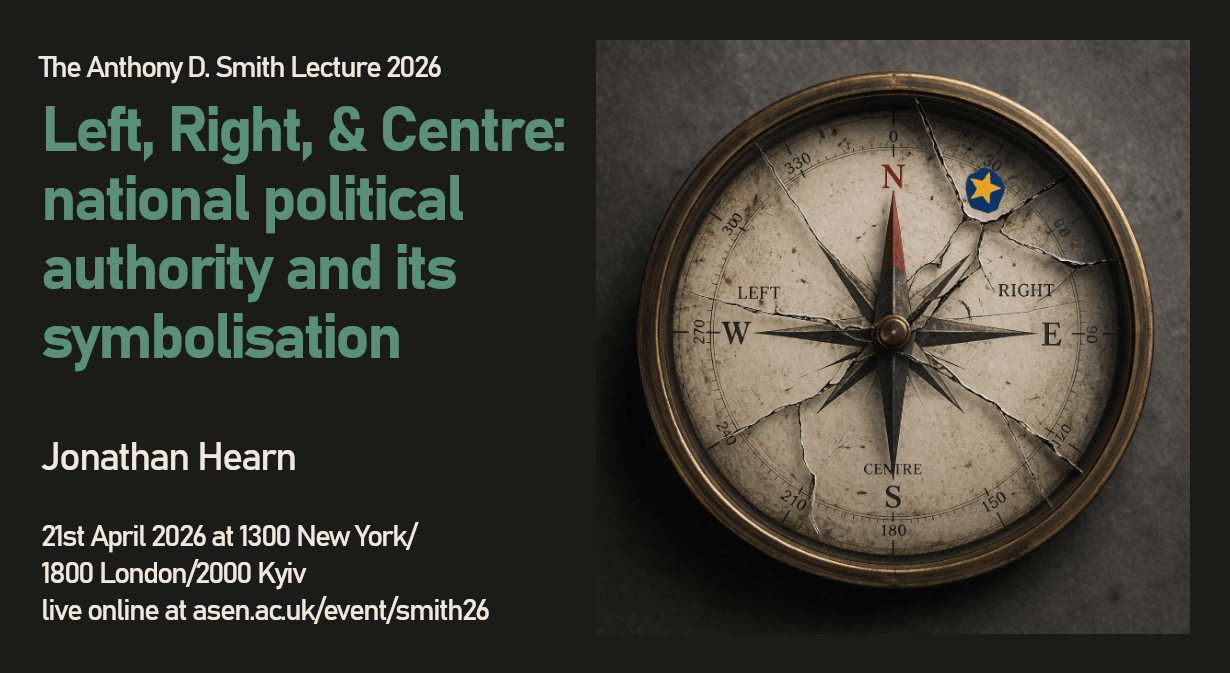
This lecture examines the ideas through which we both do and analyse national politics in the modern world, treating these as both concepts, and symbols. It looks at three pairs of concepts: Left and Right, Centre and Periphery, and Liberal and Authoritarian. Regarding Left/Right, I argue that this is a symbolic structure that is necessary for democratic politics, but not reflective of deep political principles. We may tend to overweight the analytic value of this distinction. Regarding Centre/Periphery, drawing on Edward Shils, I argue that this distinction is essential for the analysis of the distributions of material and ideological power in all states, across human history. Regarding Liberal/Authoritarian, I argue that this modern distinction hinges precisely on the ‘tightness’ or ‘looseness’ of the governing relationship between centre and periphery. Beneath this analysis of political ideas is a concern with how nations construct political authority, which for me is the core problem of nationalism. I invite the listener (and reader) to consider whether this concern comes within the remit of Anthony Smith’s ethnosymbolic approach.
Events
Anthony D. Smith Lecture 2026 | Left, Right, & Centre: national political authority and its symbolisation | Jonathan Hearn