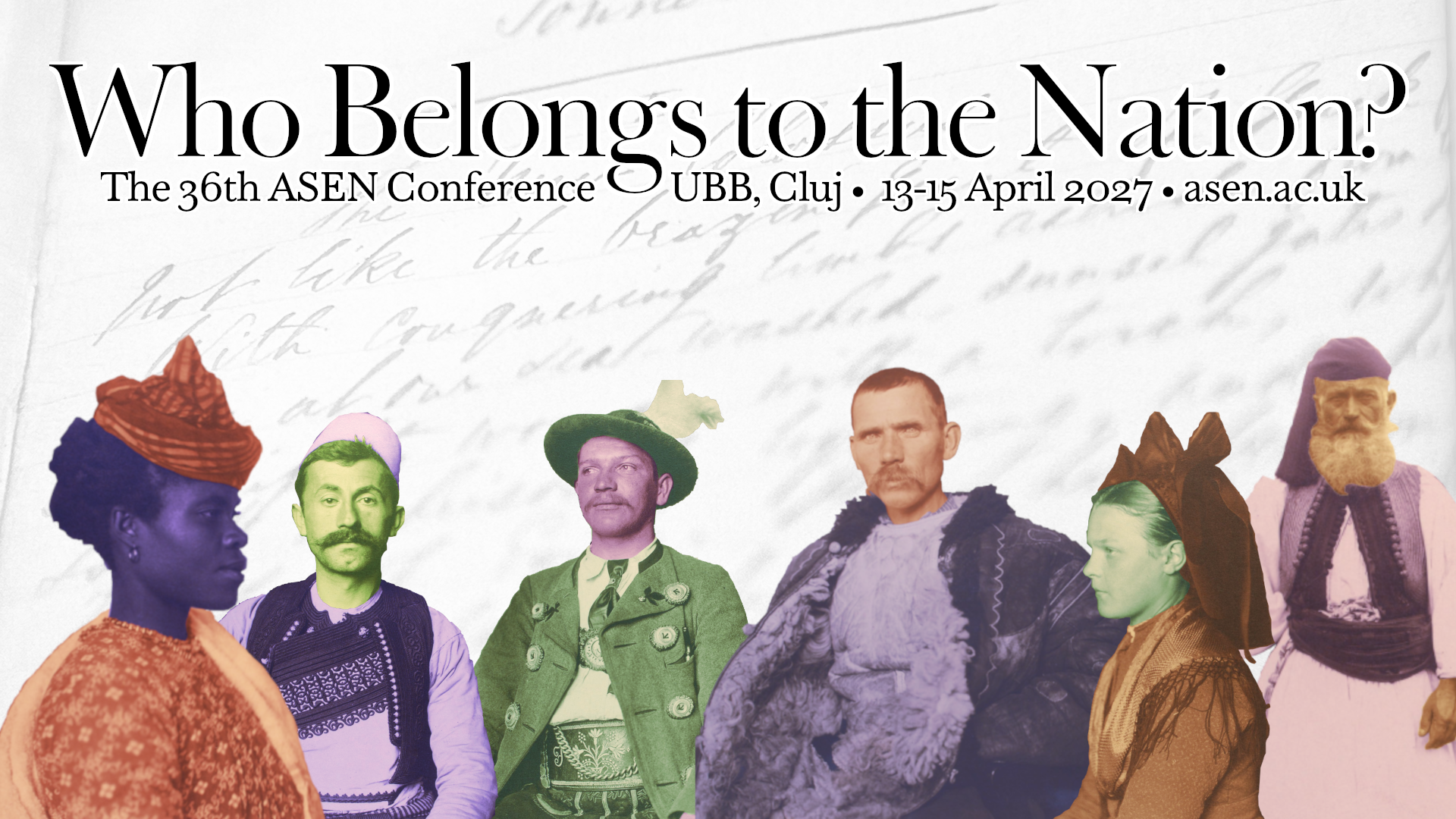
The call for papers also follows the PDF in plain text
Who belongs to the nation?
Every nationalism has had to answer this question of who belongs; no answer has settled the question for good. Nations differentiate between members and outsiders by descent, language, faith, residence, law or choice. Those differentiations are contested, redrawn and enforced constantly: in parliaments and courts, in classrooms and on the streets, and at borders.
The question also runs the other way: to whom does the nation belong? Claims to own the nation, to speak for it, define its culture and decide who may share in it, are central to contemporary populism, setting the people against the elite, and the people against outsiders.
Belonging is decided at several scales at once. States define citizenship. Regions, cities and neighbourhoods produce their own attachments and exclusions. Diasporas and transnational networks stretch belonging across borders. Belonging can be imposed, denied, and taken away.
Belonging is felt as much as it is defined. It can be routine and barely noticed, carried in the flags, habits and language of daily life. It can also be heated and mobilised in moments of crisis, celebration and resentment. We are interested in how these registers relate to one another, and in how belonging is passed on, or refused, between generations.
Drawing on both contemporary developments and long-standing theoretical debates, including civic and ethnic, ascriptive and voluntary, and rooted and cosmopolitan, we invite contributions that examine who defines belonging, on what grounds, and with what consequences.
The conference welcomes work grounded in a variety of political, cultural and historical contexts, from antiquity to the present day. We are interested in both normative and empirical accounts, and welcome papers from across disciplines and theoretical perspectives, including (but not limited to) political science, political theory, sociology, history, anthropology, geography, philosophy, cultural studies, law, education, international relations, critical race studies, and media and communication studies.
The topic is a starting point, not a gatekeeper. Abstracts are assessed on the strength of their argument, method and clarity. We ask authors to show how their work relates to the theme, but we also welcome strong papers on nationalism and ethnicity that sit outside it. We particularly encourage doctoral students and early-career researchers to submit.
Themes
Possible themes include:
Drawing the boundaries
Who decides? Theorising membership and the boundaries of the nation
Principles of belonging: descent and choice, civic and ethnic
Citizenship and the law: birthright, naturalisation and dual nationality
Language as a principle of belonging
Religion and belonging
Gendered, racialised and classed belonging
Owning the nation
Who speaks for ‘the people’? Populism and claims to own the nation
State and nation: nations without states, and belonging without believing
Minorities, homelands and nationalising states
Memory, heritage and ownership of the past
Imposing and refusing belonging
Expulsion, denaturalisation and statelessness
Empire, decolonisation and irredentism: redrawing belonging
The burdens of belonging: sacrifice, service and war
Migration, asylum and the politics of admission
Living and passing on belonging
Banal, hot and symbolic: belonging in routine, ritual and crisis
Generations and education: inheriting, transmitting and rejecting belonging
Places and scales
Homeland and territory: competing claims, borders and multi-ethnic regions
Nationalism and the city
Diaspora, transnationalism and multiple belongings
Rooted cosmopolitanism